
Live Your Bucket List Today! Join the Club Now!
Live Your Bucket List Today! Join the Club Now!


Must-Have Apps and Packing Essentials


Japan is one of the easiest countries to explore when you know which essentials to bring and what to install in your phone before you go. Navigating the country conveniently relies on a smart mix of digital preparedness and a few very specific physical items, shaped by local customs such as frequent shoe removal and the surprising scarcity of public rubbish bins.
This guide walks you through the apps, items, and on-the-ground habits that will make your next Japan trip smoother from airport arrival to your final souvenir stop.
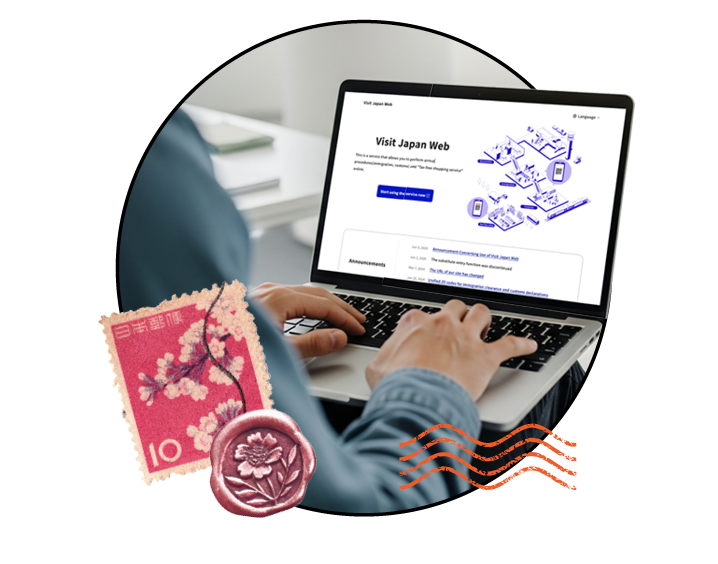
Before you even board your flight, set aside time to register on the Visit Japan Web portal. This official platform lets you pre-fill immigration and customs information and generates QR codes for you to show on arrival. At major gateways like Narita, Haneda, and Kansai International (KIX), dedicated lanes for Visit Japan Web users can significantly shorten your time in queues. You skip paper forms, avoid scrambling for pens, and walk straight to the digital counters. For families, this is especially useful – everyone’s details can be organised and accessible on a single device.
Japan is increasingly digital-first, and having the right apps pre-installed can save you from a lot of head-scratching at ticket machines, train platforms, and restaurant entrances. Think of this as your “survival kit” that lives in your phone.
Start with reliable data. In 2026, eSIMs have become the default choice for many travellers, especially if you want to get online the moment your plane lands. Rather than hunting for a physical SIM or queuing at an airport counter, you can purchase an eSIM from providers like Airalo or Ubigi before departure, scan a QR code, and activate your data plan in a few taps. For solo travellers, an eSIM is often the simplest option; your phone connects directly to local networks with no extra hardware.
If you are travelling as a family or group, or carrying multiple devices (phones, tablets, laptops), a pocket Wi-Fi still makes a lot of sense. These portable routers can connect several gadgets at once, let you control data usage centrally, and are easy to pick up at major airports or have delivered to your hotel. The key is to decide before arriving: eSIM for individual flexibility, pocket Wi-Fi for shared coverage.


Public transport is one of Japan’s greatest strengths, but the sheer number of lines, operators, and platforms can feel overwhelming without digital support.

Google Maps will be your daily workhorse. It handles walking routes, platform numbers, and transfer timings well, especially in big hubs like Shinjuku, Tokyo, Osaka, and Sapporo. Plug in your destination and you get not only departure times, but also which station exit to use, which can save you 10–15 minutes of wandering at large complexes.
Japan Travel by NAVITIME is particularly useful for long-distance or complex intercity planning. Where it shines is in filtering routes: you can prioritise Japan Rail Pass–covered trains, avoid multiple transfers, or select the fastest or cheapest route. If you’re doing a multi-city itinerary, this app helps you see your options clearly.

SmartEX has become the go-to tool for Shinkansen (bullet train) bookings. Rather than queue at ticket machines or at the Midori-no-madoguchi ticket offices, you can browse schedules, reserve seats, and pay directly on your phone. On busy travel days, like Golden Week or weekends during cherry blossom season, having SmartEX set up in advance means you can lock in your seats while you’re still at your hotel.

GO, Japan’s leading taxi-hailing app, fills the gaps when trains and buses are inconvenient. Through its English interface, you can call taxis, track them on a map, and pay via GO Pay or a registered card, which is particularly helpful late at night, with heavy luggage, or when travelling with kids or older family members. Taxis are not cheap, but they are safe, clean, and extremely reliable – an excellent backup when you miss the last train.
Japan’s bullet trains are fast and comfortable, but storage space for big suitcases is carefully regulated. If your luggage exceeds a total of 160 cm (height + width + depth), it is classified as oversized. In that case, you must book a special seat with dedicated luggage space at the back of the carriage. This can be done through ticket machines at major stations or directly via apps like SmartEX.
Ignoring this rule is not recommended. If you board with oversized luggage without the appropriate reservation, train staff may instruct you to move and could impose a fee. Given the high frequency of trains and the culture of order and punctuality, planning ahead with correct seat reservations makes life easier both for you and for fellow passengers.

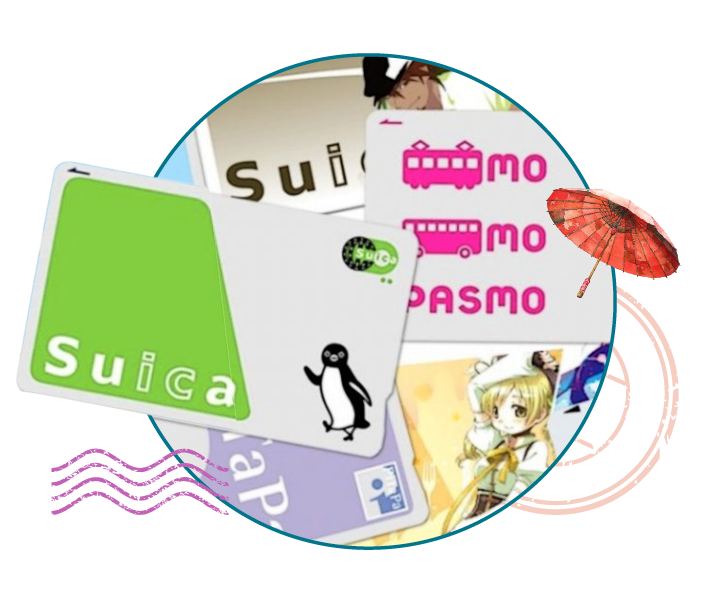
Traditional plastic transport cards like Suica and Pasmo are being complemented – and increasingly overshadowed – by fully digital IC cards. Instead of buying a physical card from a machine and topping it up with cash, you can add Suica or Pasmo directly into your Apple Wallet or Google Wallet (on supported devices). Once added, you simply hold your phone or smartwatch over the ticket gate reader, and the correct fare is deducted automatically.
This same digital IC card works for much more than trains. You can tap to pay at most convenience stores (konbini) like 7-Eleven, Lawson, and FamilyMart, at many vending machines, some coin lockers, and even certain cafés and fast-food outlets. The experience is frictionless – no need to fumble with coins or small bills every time you want a drink or quick snack. Physical IC cards remain available, especially at airports and major stations, but for travellers with compatible phones, going fully digital is usually the most convenient option.
Japan is very welcoming to visitors, but English usage can be patchy once you leave major tourist zones. A couple of translation tools will bridge the gap neatly.
Google Lens (within Google Translate or the Google app) is invaluable when confronted with kanji-heavy menus, ticket machines, or appliance panels in your accommodation. Point your camera at the text and an English overlay appears on your screen. It is not perfect, but it is often accurate enough to distinguish, say, chicken from pork, or to understand whether a washing machine cycle is “quick” or “delicate”.
VoiceTra is a free voice translation app optimised for spoken Japanese. It is extremely handy when you want to explain something more complex to hotel staff, taxi drivers, or shop assistants. You speak in English, show or play the Japanese output, and it can translate back into English when they respond. This back-and-forth makes it easier to solve practical issues like luggage delivery, food allergies, and transit directions.
One of the biggest surprises for first-time visitors is how clean Japanese cities are despite the relative lack of public rubbish bins. After certain historical events and for logistical reasons, many bins were removed from public spaces, and the expectation evolved that people carry their rubbish home or to designated areas.
As a visitor, the easiest adaptation is to keep a small reusable dry bag or plastic bag in your day pack. Food wrappers, drink bottles, and tissues can be stored there until you find a bin, often near convenience stores, train stations, or your hotel. This habit might take a day or two to get used to, but it quickly becomes part of your routine – finish your snack, tuck the wrapper away, and empty the bag back at your accommodation.
You will remove your shoes far more often than in many other countries: at temples and shrines, traditional restaurants, some izakaya, ryokan (traditional inns), and even certain clothes shops’ fitting rooms. Wearing comfortable shoes that are easy to slip on and off – like loafers, sneakers with elastic laces, or low boots – saves time and effort. Good, clean, hole-free socks are essential because your feet will be visible in public spaces. Consider bringing a couple of nicer pairs if you plan to dine at upscale establishments or stay in ryokan.

Before your holiday, remember to check the “Before You Go” section on your resort’s page via the Club Wyndham South Pacific website or mobile app. This page includes key details such as check-in and check-out times, meal plans and dining options, and available activities and amenities, helping you plan your stay in advance. If you have any questions about your upcoming trip, please contact your Owner Services team, who will be happy to assist.
Prepare before you fly, adapt as you go, and Japan will reward you with a journey that feels both wonderfully efficient and deeply memorable.

Club Wyndham South Pacific acknowledges the traditional custodians of Country throughout Australia and their continuing connection to land, sea and community. We pay our respects to them, their culture and to the Elders past, present and emerging.

Escape Form Here


Our Owner Services hours of operation have temporarily changed, as a result of staff absences due to isolation requirements of COVID-19. We will now close at 6pm Australian Eastern Standard Time so we can provide more support during the busier hours of the day.
If you have exhausted your annual Club housekeeping entitlement, you can proceed with your online reservation by selecting the ‘borrow housekeeping’ box prior to proceeding with your reservation.
If your reservation meets the minimum night requirements, a housekeeping token will be returned to your account the next business day. Alternatively you can call Owner Services to make the eligible booking using complimentary housekeeping.
Please note that Privileges complimentary housekeeping will only be awarded for an eligible stay once you have exhausted your annual Club housekeeping entitlement.
For more information please visit
https://clubwyndhamsp.com/activitieshub/changes-to-developer-benefits/

A Glimmer Grab has appeared—your gateway to limited-time holiday packages at your favourite resorts. Discover your next getaway before it’s gone.